
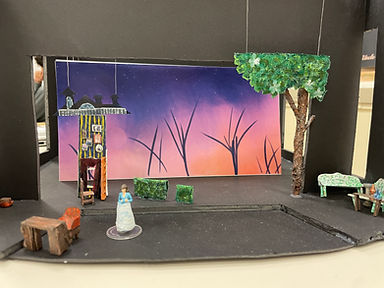
Scenic Design
My design and process for Uncle Vanya by Anton Chekhov.
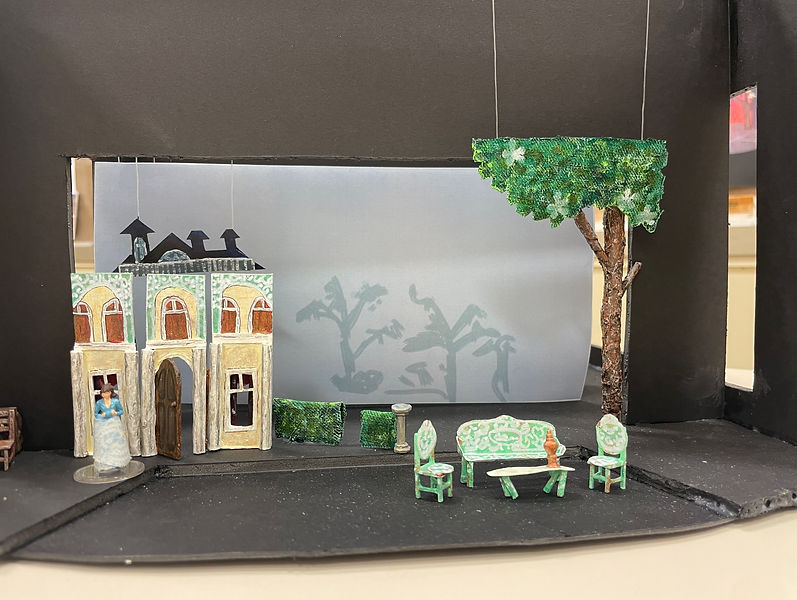
Act 1
Garden, day. Color model made from cardboard paper, foam and acrylic paints.(2024)
Act 2
Living room, afternoon. Color model made from cardboard paper, foam and acrylic paints.(2024)


Act 3
Drawing room, night. Color model made from cardboard paper, foam and acrylic paints.(2024)
Act 4
Study, sunset. Color model made from cardboard paper, foam and acrylic paints.(2024)

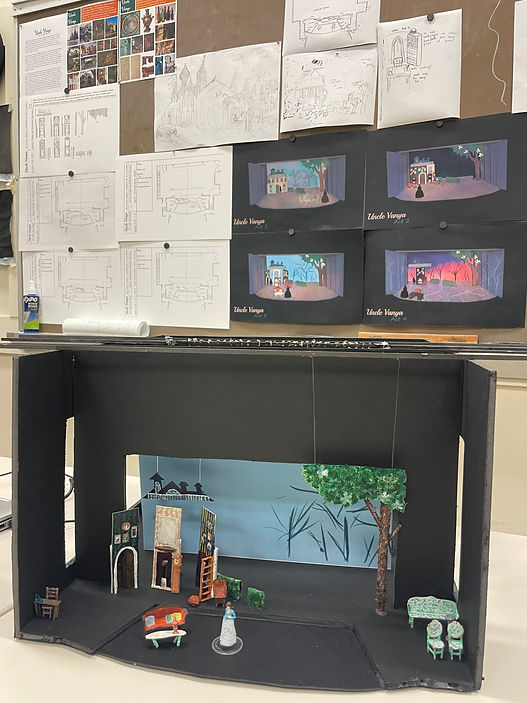
The play, Uncle Vanya by Anton Chekov, adapted by Annie Baker, is not a study of 1890s rural Russia, but rather the toll that a long life takes on the human condition. The professor and his extended family and friends are all in various states of decay, whether that be physical, emotional, or moral. Their bodies are merely vessels, cracked shells for their souls. They pride themselves of being men and women of status: smart, crafty, beautiful, kind. They are living on the brink of tragic upheaval, terrified to topple over the edge.
Antebellum New Orleans exemplifies these features to the extreme. Beautiful gardens and lavish mansions hide the horrific human rights violations out in the fields. The setting of a decaying mansion on the outskirts of 1860s New Orleans captures the central themes of fleeting memories, shattered illusions, and the ever-present passage of time. The house and gardens are well past their prime. The distinct teal oxidation of the ornately worked garden furniture illustrates how long they have sat outside and weathered the elements. Even the trees in the distance seem to change shape as night falls, becoming knarled, twisted versions of their former selves, even as fireflies flit blissfully among them.
Inside the house, the dressings are gaudy but fading. The colors include muted olive greens, rust-colored browns, deep blues, and dusty cream. Florals and swirls play a poignant role in the wallpaper and ornamentation, a last hope to cling to the natural world. As the acts go on, the house itself seems to shatter, breaking apart and forcing the people onstage to keep the cracks from stretching ever wider. The location of the flats stage right emphasizes the vulnerability of the family, even though they are free to move about the stage. Even though the house maintains a semblance of Southern charm, the interior decoration is infused with the elements of the original 1890s Russia. The clusters of photographs on the wall illustrate the long lineage of the family, while simultaneously being almost unrecognizable in their ancient state. Even as they try to escape, this place draws them back in. After all, what good is a house without a few ghosts?


My visual research for this design included images of original Russian buildings, modern paintings inspired by the era, New Orleans gardens, furniture and architecture, as well as color schemes, close ups of materials, and wallpaper.